
You need a professional room for a few hours, not a five-year lease. Good news: Omaha has plenty of options, from coworking conference rooms to downtown event halls. The hard part is matching the space to your group, your budget, and the impression you want to make - and figuring out what you're actually going to pay once the fees are added up.
I'm Hunter Radenslaben, co-founder of Avant Spaces in West Omaha. I've helped a lot of small teams find the right room for everything from a client pitch to a quarterly all-hands, and I get some version of the same question almost every week: what does this actually cost, and what am I going to get for it? Here's the straight version, including the pricing breakdown and the fine print most listings leave out.
The Types of Meeting Space in Omaha
Before you start comparing rates, it helps to know the general categories you'll run into around the metro:
Coworking conference rooms. The most flexible option. Book by the hour or the day, with modern setups because members use them daily. This is the category we fall into at Avant Spaces.
Hotel meeting rooms. Good for mid-size groups or full-day sessions, especially with out-of-town guests who need to stay on site.
Dedicated event halls and ballrooms. Built for conferences, banquets, and galas well beyond a typical business meeting's headcount.
Public and community meeting rooms. A budget-friendly option in some cases, though these usually come with restrictions on commercial use — always check directly with the venue before you plan around one.
Match the Space to Your Group
For small teams of 2 to 10, a ballroom is overkill. You want a room where you can hear each other think: a whiteboard, a screen you can plug into, a door that closes. Plug-and-play beats fancy.
For larger gatherings, you need real capacity and setup help. Larger venues offer training-style or banquet layouts and usually have staff to handle the setup so you're not sweating the seating chart.
What Shapes Meeting Room Rates and Cost
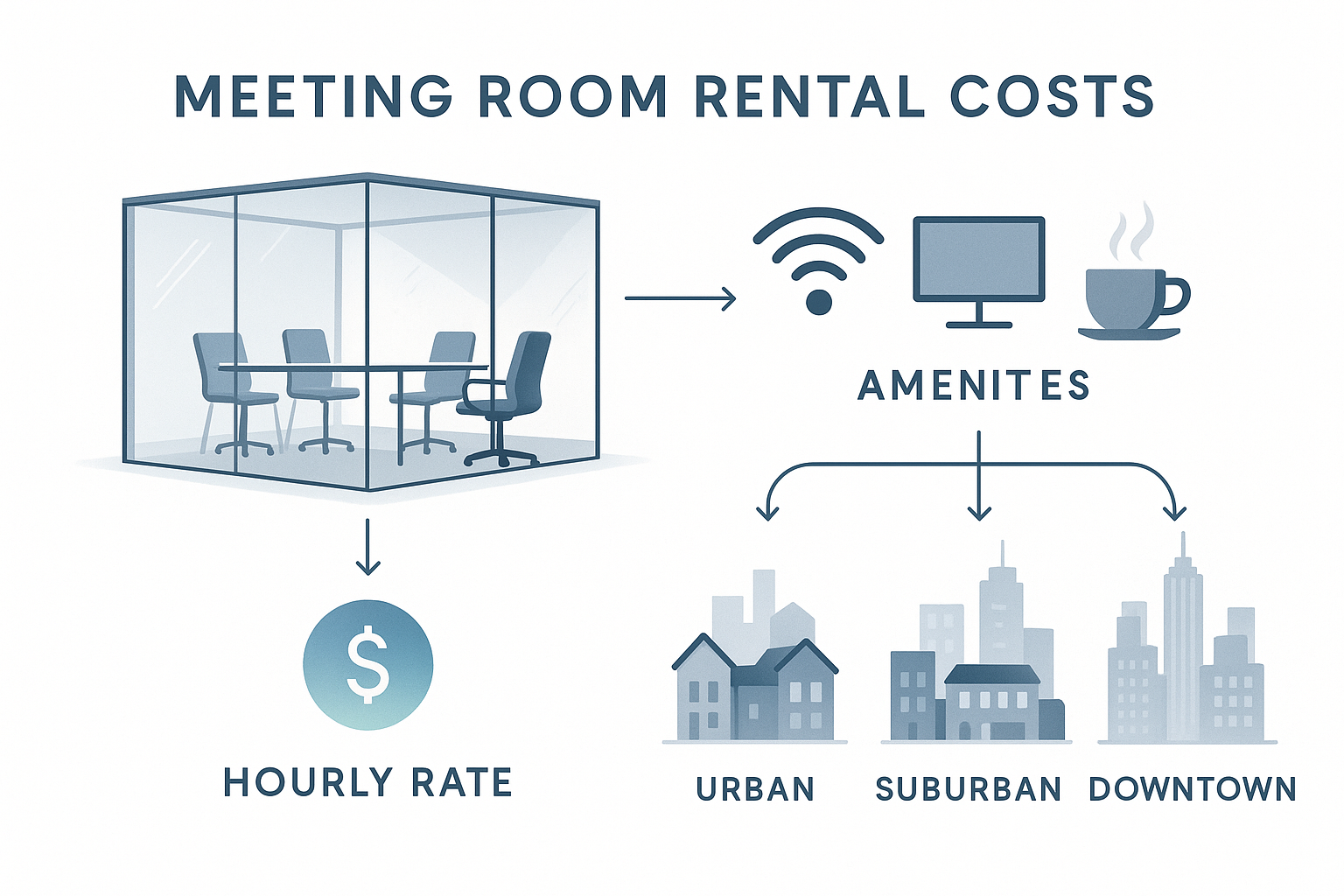
Before I get into pricing, it helps to know what's actually driving it. Every room rate I've ever quoted comes down to some mix of four things: how long you need it, how many people are showing up, where it is, and what technology comes with it.
Duration. A quick client call might only need an hour. A planning session might need half a day. A training day or retreat usually needs a full day once you factor in setup time, breaks, and the conversation that always runs long after the agenda is done. Most rooms in Omaha price by the hour, with better value once you move to a half-day or full-day block.
Capacity. A two-person interview room almost always costs less than a conference room built for a full team, but don't book on headcount alone. Eight people with laptops, notebooks, and a slide deck need more elbow room than eight people just talking. If you're unsure how much space your group actually needs, it's worth reading up on how to choose the right meeting room size before you commit to a booking, since a room that technically seats your group can still feel cramped.
Location. A room near major roads, business districts, and residential growth areas tends to price differently than one buried downtown with a parking garage attached. In West Omaha and Elkhorn, easy parking and a short drive are a real part of the value, not just a nice-to-have.
Technology. Wi-Fi, a big display, video conferencing gear, whiteboards, HDMI and AirPlay support, and someone to help if it doesn't work - some rooms bundle all of that into the rate, others bill it separately. Always ask what's included before you assume the posted price is the whole price.
Hourly, Daily, and Monthly Pricing
The right rate structure depends on how your team actually works. Paying for a full day when you need ninety minutes wastes money. Booking several separate hourly blocks for an all-day workshop can end up costing more than a single day rate that includes the same room and amenities.
Here's the rough guide I give people:
Hourly - best for focused work: sales calls, interviews, quick strategy sessions, small client presentations. You pay only for the time you reserve.
Daily - better when the day needs room to breathe: workshops, quarterly planning, board meetings, client onboarding. A day rate stops you from watching the clock.
Monthly - makes sense if your team meets often and wants a dependable room without a long-term office lease. An office suite membership with conference room hours built in can be more cost-effective over a quarter than booking outside venues every time, and it means you're never scrambling to find a room the week of your board meeting.
Our own conference room here at Avant Spaces starts at $50/hour, seats up to 8, and includes fiber internet, a 65-inch TV with HDMI and AirPlay, and free parking — full details live on the conference room page.
Before you settle on a plan, run through this quick checklist:
Estimate how often your team will actually meet each month.
Match the room size to your real group, not your best-case attendance.
Confirm whether internet, display tools, whiteboards, and refreshments are included.
Ask about setup time, cleanup time, and after-hours access.
Compare the total price, not just the posted hourly number.
Amenities That Actually Affect Value
A room is just a room until the tools in it are right. A lower posted price isn't the better deal if you show up and have to bring your own HDMI cable, hunt for a parking spot, or walk clients through a confusing entry process. Here's how the amenities I get asked about most often actually affect the value of a booking.
High-speed internet — supports video calls, shared files, and live demos without a loading spinner killing the room. Ask: is fiber internet included in the base price?
Display screen — helps with presentations and hybrid meetings. Ask: what connection options are available - HDMI, AirPlay, both?
Whiteboard or writing surface — useful for planning, brainstorming, and training. Ask: is it already in the room, or an add-on?
Parking — reduces arrival stress for clients and teams. Ask: is parking free, on-site, and easy to find?
Refreshments — keeps longer meetings moving comfortably. Ask: is coffee included, or billed separately?
Setup support and after-hours access — saves you from burning the first 20 minutes on a cable, and helps teams that meet outside standard hours. Ask: are there extra fees or access steps?
At our conference room, that list is short and settled: fiber internet, a 65-inch TV with HDMI and Apple TV AirPlay, a whiteboard, free parking at the door, and coffee already made. It seats up to 8 comfortably. The best room isn't the biggest or the flashiest one - it's the one that lets your meeting start on time and end with clear next steps.
Hidden Fees to Watch For
This is the part that trips people up. A room can look affordable online and then get expensive fast once the invoice shows up with extras tacked on. Common add-ons to ask about before you book include:
Extra audiovisual equipment
Video conferencing setup
Printing or copying
Catering coordination or coffee service
Parking fees
Weekend or evening access
Cleaning fees
Cancellation or rescheduling fees
Some of these are fair, especially for larger events or unusual requests. The problem is the surprise, not the charge itself. A transparent provider will tell you upfront what's included, what costs extra, and what happens if your meeting runs long. Before you rent anywhere, ask for the total in writing: date, start and end time, room name, headcount, included amenities, and any extra services. That one email prevents almost every billing surprise I've ever seen.
Where to Meet in the Metro
Downtown and the Old Market. Walkable, historic, steps from the best dining. Great for a post-meeting dinner. Parking is the tradeoff.
West Omaha and Elkhorn. Suburban ease, free parking at the door, closer to where a lot of business owners actually live. This is where we are.
Frequently Asked Questions About Meeting Room Rental in Omaha
Can I book after hours or weekends?
Many spaces allow it case by case, sometimes for an added fee to cover staffing. Check the calendar or call ahead so you're not caught off guard by the details.
Can I bring my own catering?
Hotels and convention centers usually require in-house catering. Most coworking spaces, including ours, are flexible and let you order from any local spot.
Is it cheaper to rent by the hour or book a membership?
If you only need a room once or twice a month, hourly or daily rental usually wins. If your team is in a conference room every week, a membership with bundled hours often comes out ahead over a quarter, and it means you're never scrambling to find a room on short notice.
Book Your Room
Whether you want the downtown energy or the easy, professional feel of West Omaha, there's a room in this metro that fits your budget and your group. We built Avant Spaces to be the neighborhood spot with the fiber internet, the tech that actually works, and pricing you can predict before you ever get an invoice.
Schedule a tour or book our West Omaha conference room directly, and we'll have the coffee ready.